A child decides within seconds whether a picture book is for them, long before anyone reads the words aloud. That makes children’s book illustration the most visible choice in your book, and style is the choice authors struggle with most. This guide explains the main picture book illustration styles, how to match one to your story, how to illustrate a children’s book step by step, and what to know before self-publishing.
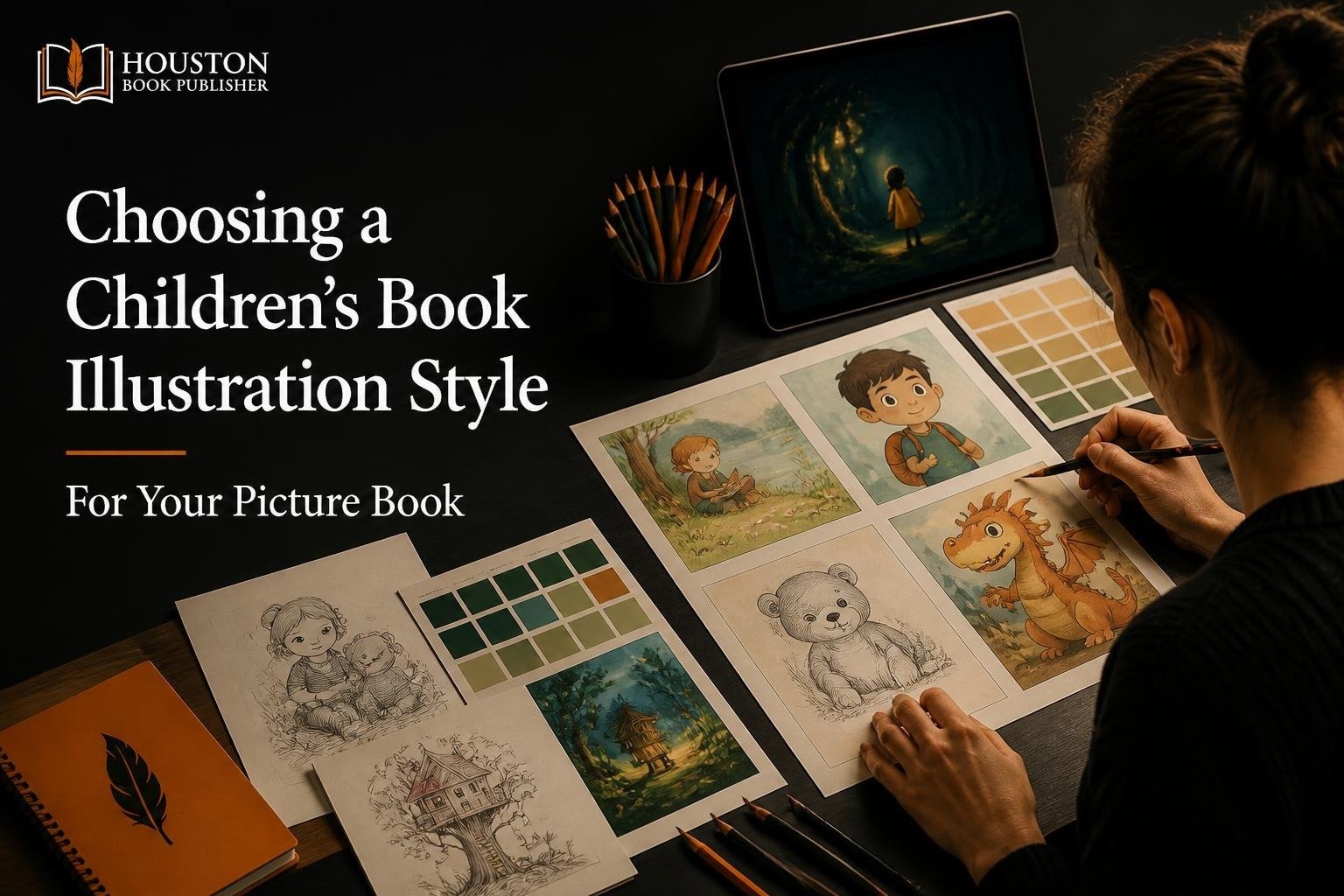
Picture Book Illustration Styles and What Each One Says
- Watercolor: soft edges, translucent color and gentle gradients. Watercolor picture book art suits bedtime stories, nature themes and quiet emotional moments. Painted originals are usually scanned, so the artist should correct color for print.
- Digital painting: flexible and easy to revise, with a wide range of textures. It suits adventure, fantasy and stories with many scene changes.
- Flat vector shapes: bold, clean and readable at small sizes. It works well for concept books, alphabet books and early learning titles.
- Pencil and ink with color wash: loose, whimsical line work that suits humor and playful characters.
- Collage and cut paper: textured and tactile, with a handmade look that suits toddlers and early readers.
How to Choose a Style for Your Story
Start with the reader’s age and the story’s mood. Board books and toddler stories do well with simple shapes and bold color, while stories for ages four to eight can carry more detail and subtle emotion. Then test your main character: a style that suits a gentle bear may not suit a mischievous robot.
Collect five to ten published picture books you admire and note what you respond to. Share them with your illustrator as references for mood and palette, not as something to copy. Before committing to a full book, ask for a style test, such as a character sketch or one sample spread.
Common Style Mistakes to Avoid
The most frequent problem is a mismatch between style and audience, such as dense, realistic scenes in a book for toddlers. Another is leaving no room for text, which forces the designer to cover part of the art. Watch for characters whose clothing, proportions or color change between pages, and make sure the palette stays consistent from the first spread to the last. Reviewing the sketches before color catches most of these problems early.
How to Illustrate a Children’s Book: The Process
- Break the manuscript into spreads. Standard picture books commonly run 32 pages, and KDP’s minimum print page count is 24.
- Thumbnail sketches. Small rough layouts show composition and pacing before any detail is drawn.
- Character design sheets. Each character is drawn from several angles so they look the same on every page.
- Detailed sketches. You approve these before color is added, which is the cheapest time to request changes.
- Final art. Images are delivered at 300 DPI at print size, with 0.125 inches of bleed and space reserved for text.
Custom Children’s Book Illustrations vs. Shortcuts
Custom children’s book illustrations are drawn for your characters and story, so one character can appear in dozens of poses and stay recognizable. Stock art rarely offers that consistency. If you are considering AI-generated images, note that KDP asks authors to disclose AI-generated content when publishing, and characters often drift in appearance between pages.
Whoever creates the art, get a written agreement stating who owns it and how you may use it. The US Copyright Office’s Circular 30 explains how works made for hire are treated. This is general information, not legal advice.
Children’s Book Cover Design
The cover is the first illustration a buyer sees, and it must work as a small thumbnail as well as in print. Strong children’s book cover design uses the same characters and palette as the interior, a large readable title and one clear focal point. A 32-page picture book will not have spine text, since KDP prints spine text only on books with more than 79 pages. Our book cover design team builds the cover once the final page count is set.
Self-Publishing a Children’s Book
Self-publishing a children’s book on KDP means preparing a print-ready PDF with bleed, 300 DPI images and the page count KDP’s tools expect. Color interiors cost more to print than black-and-white, which raises your minimum list price, so check KDP’s royalty calculator before you set one. Order a printed proof as well, because colors on screen often look different on paper.
Picture Book Publishing in Texas
Authors choosing picture book publishing Texas services often need one team to coordinate the illustrator, designer and publisher. Houston Book Publishers is one of several Houston book publishers offering this, and Houston-area authors can meet our team in person. If you are searching for children’s book illustrators in Houston, judge fit by portfolio, process and a style test rather than by zip code, since most illustration work is done remotely.
Frequently Asked Questions
It depends on page count, style and revision rounds. Painterly styles generally take longer than flat vector art. Ask for a milestone schedule before you start.
Most 32-page books use roughly one illustration per spread, plus the cover. The exact number depends on your layout and where text pages fall.
Yes. The cover is a promise about what is inside, so it should use the same characters, palette and drawing style as the interior pages.
Yes, if your artwork can be delivered at 300 DPI at print size and stays consistent across pages. Many authors hire an illustrator for consistency and speed.
Our children’s book illustration service pairs you with an artist, starts with a style test, and connects to book publishing so your files are ready for KDP. Get in touch to discuss your picture book.